
Subtotal ₨ 0
So, you’ve had your hair transplant—congrats! That’s a pretty big step, and let me tell you, most people don’t realize the surgery itself is only half the story. What happens afterwards—the healing, the waiting, the daily “is this normal?” moments—that’s where the real journey begins.
I’m not gonna sugarcoat it: recovery takes patience. But if you know what’s coming, you’ll stress way less. Let’s walk through it, step by step.
The First Few Days: The Awkward Stage
Fresh out of surgery, your scalp feels… odd. Not unbearable, just tight—like you’re wearing a snug cap. Depending on your case, the whole thing probably took somewhere between 4–8 hours (source).
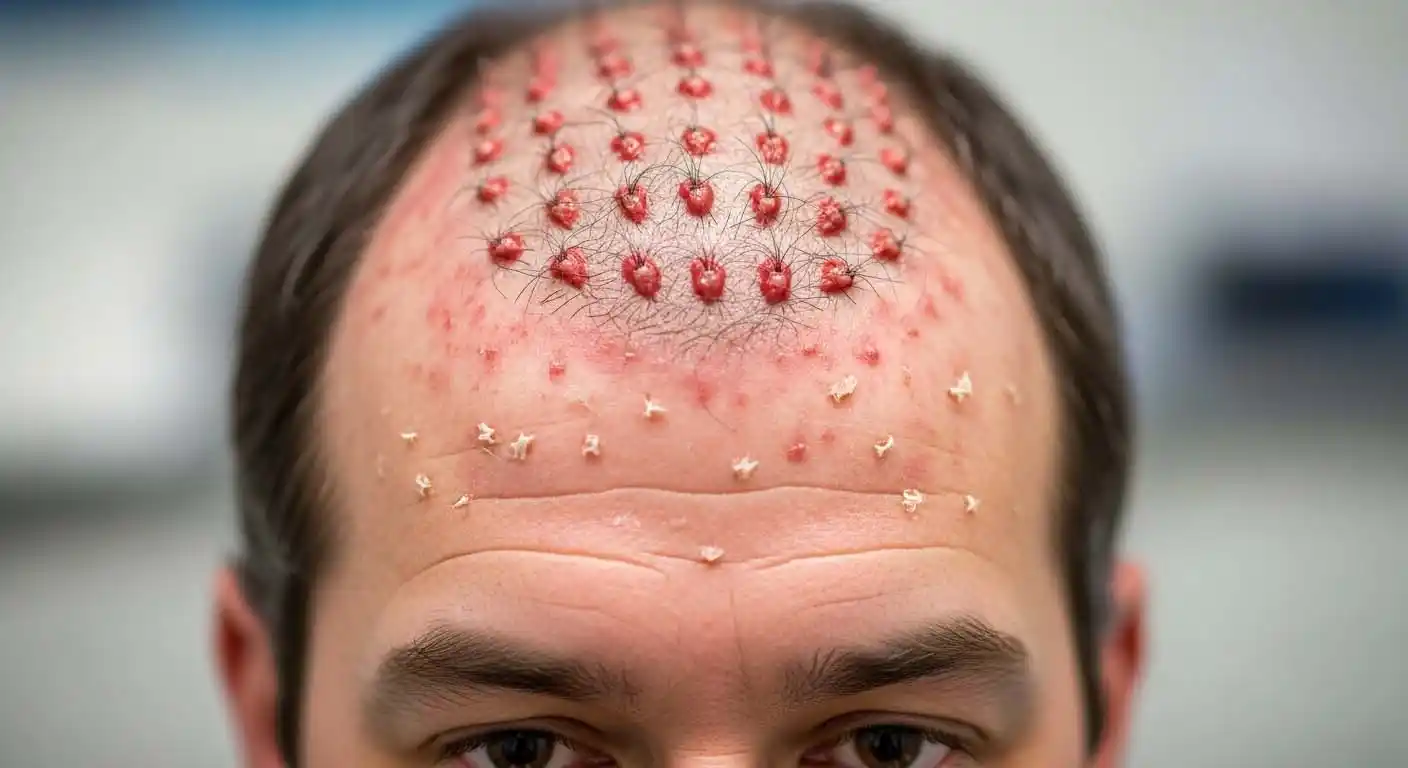
Within a day or two, you’ll see redness and tiny scabs. Totally normal. Honestly, the mirror can be a little intimidating at this point, but don’t freak out. Take your painkillers if you need them, follow the list your doctor gave you, and resist the temptation to touch everything.
Your Recovery Timeline: The Rollercoaster
Day 7: The Itchy Week
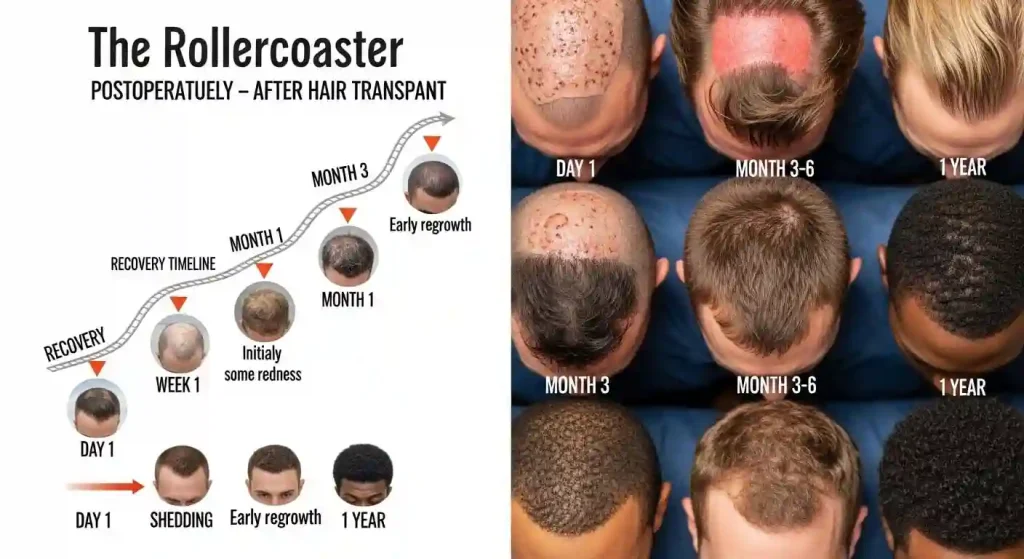
Around a week in, the scabs are in full force. Your head may itch like crazy. Don’t scratch—seriously. Stick with your gentle wash routine, keep your hands off, and avoid the obvious things (gym, smoking, alcohol, and too much sun).
Day 15: The Shedding Begins
Two weeks later, scabs are mostly gone, and your scalp looks less “freshly operated on.” Here’s where a common question pops up: “When can I rub my head after hair transplant?” Answer: very gently, yes. But no aggressive rubbing yet. You’ll also notice some hairs falling out. Don’t panic—that’s “shock loss.” Totally part of the process.
1 Month: The Patience Test
By now, your scalp looks calmer, but the shedding might continue. It feels like a step backward, I know. The truth is, the real action is happening under the skin—follicles are taking a breather before growing new hair.
3 Months: The Ugly Duckling Phase
If you snap photos at three months, you may not love them. Hair looks thin and patchy, and growth seems minimal. This stage has a nickname for a reason. But—hang in there. What’s coming next is worth it.
5 Months: New Growth Appears
This is when little baby hairs start poking through. They’re soft and fine at first, but they’ll thicken up over time. Your existing hair after the hair transplant helps blend everything in, so things start looking more natural.
6 Months: Now We’re Talking
At six months, you’ll really notice. Friends may even start pointing it out. Hairline shape, density, overall thickness—it all begins to click. Keep in mind, full results usually show up between 12–18 months, but the halfway point already feels rewarding.
Post-Op Do’s and Don’ts
Think of your grafts like tiny seedlings. Baby them.
❌ Don’t: smoke, drink, do heavy workouts, swim, or wear tight hats too early.
✅ Do: wash gently, sleep with your head slightly elevated, and stick to your doctor’s meds and sprays.
Messing around with your care routine in the first month can set you back.
Possible Complications: Should You Worry?
Most recoveries are smooth. But sometimes you’ll see swelling, itching, or tiny pimples (folliculitis). They’re not usually a big deal and clear up with treatment.
As for pain—it usually fades within a few days. If you’re still hurting after two weeks, that’s when you should check back with your surgeon.
So, When Do You Actually See Results?
This is the big question. The truth? It’s a waiting game. Around 5–6 months you’ll see solid progress, but the real wow factor usually hits between 9–12 months (source). For some people, it takes closer to 18 months before everything fully settles.
So if you’re asking, “How long until I see the final results postoperatively after hair transplant?”—the honest answer is: patience is your best friend.
Conclution
From the itchy first week to the exciting six-month milestone, recovery is a journey. Some days you’ll look in the mirror and think, “Yes, it’s happening!” Other days, you’ll wonder if you wasted your money. That’s all normal.
But here’s the bottom line: if you stick to proper post operative hair transplant care and avoid the classic mistakes, chances are your results will be worth every bit of waiting.
It’s not just about regrowing hair—it’s about regaining confidence. And honestly, that’s priceless. 🙌
FAQs
1. How long does it take to recover after a hair transplant?
Most patients recover within 7–10 days, but full healing and natural growth can take 3–6 months.
2. Does the donor area grow back after a hair transplant?
No, the donor hair doesn’t regrow. However, enough follicles remain to keep the area looking natural.
3. What aftercare is needed after a hair transplant?
Avoid touching, scratching, or washing the scalp for the first few days. Use prescribed medications, gentle shampoo, and follow your surgeon’s specific instructions.
4. Is the donor area painful after a hair transplant?
Mild pain or soreness is common for a few days but usually managed with pain relievers.
5. What is the most painful part of a hair transplant?
Most patients find the initial anesthesia injections slightly uncomfortable. The procedure itself is generally painless.
6. How to know if grafts are dislodged?
Dislodged grafts may appear as bleeding spots or missing follicles in the implanted area during the first week.
7. Can I touch my grafts after 7 days?
Yes, after 7–10 days grafts are usually secure, but touching should still be gentle.
8. What does a failed hair graft look like?
A failed graft may appear as scabbing, redness, or absence of new hair growth in that spot.
9. How to detect graft rejection?
Signs include persistent redness, swelling, pain, or pustules at the graft site.
10. Which organ has the highest graft rejection?
The lung has the highest rate of rejection among transplanted organs.
11. How to know if grafts are secure?
By 10–14 days, grafts are typically anchored firmly in the scalp and won’t fall out with normal activity.
12. What are the stages of graft rejection?
- Hyperacute rejection (minutes–hours)
- Acute rejection (days–weeks)
- Chronic rejection (months–years)