
Subtotal ₨ 0

Hair loss is one of those things that creeps up on you. One morning you notice more strands in the shower, your ponytail seems thinner, or your scalp shows a bit more through your parting. And before long, you’re asking: Why is this happening? What can you actually do about it? Let’s dive deep—because hair loss causes are many, and medical treatment options are getting better all the time.
What Causes Hair Loss? It’s Not Just Genetics
First off, there’s no single culprit. Depending on your sex, age, health, and lifestyle, several factors—often overlapping—can trigger hair fall.
Vitamin and mineral deficiencies
- One study found that low levels of vitamin D are common in people with alopecia areata; patients had on average ~8.5 ng/dL lower vitamin D than controls. (PMC)
- Iron deficiency (often measured via ferritin), biotin, zinc, vitamin B12, vitamin C—deficiencies in these can disrupt the hair growth cycle. (Harvard Health)
- But beware: too much of some vitamins (e.g. vitamin A, selenium) can also cause hair loss.
Hormonal imbalances
- In women, hormones like estrogen, progesterone, thyroid hormones, androgens (especially DHT) play big roles. Polycystic Ovary Syndrome (PCOS) is a classic example: higher androgen levels can lead to female pattern hair loss. (American Academy of Dermatology)
- Thyroid disease is another common offender—too little or too much thyroid hormone can lead to thinning hair. (American Academy of Dermatology)
Genetics
- Male pattern baldness (androgenetic alopecia) is very common: by age 50, roughly 50% of men will show some signs of pattern hair loss. (Wikipedia)
- Women also experience pattern hair loss, but usually more diffusely spread (not the distinct crown + temples seen often in men).
Medical conditions & external triggers
- Illnesses like autoimmune disease, severe infection, scalp issues, or dermatological conditions can cause hair loss.
- Medications (some for blood pressure, cholesterol, birth control), stress, nutritional deficits, childbirth, major surgery—all can cause what’s called telogen effluvium—widespread hair shedding.
- Lifestyle: poor diet, lack of sleep, excessive styling or chemical damage. In Pakistan, a recent study showed about 76.2% of participants reported hair loss; factors like stress (35.1%), poor hair care routines (28.9%), and poor diet (25.2%) were commonly cited.
How Hair Loss Works Differently in Females vs Males
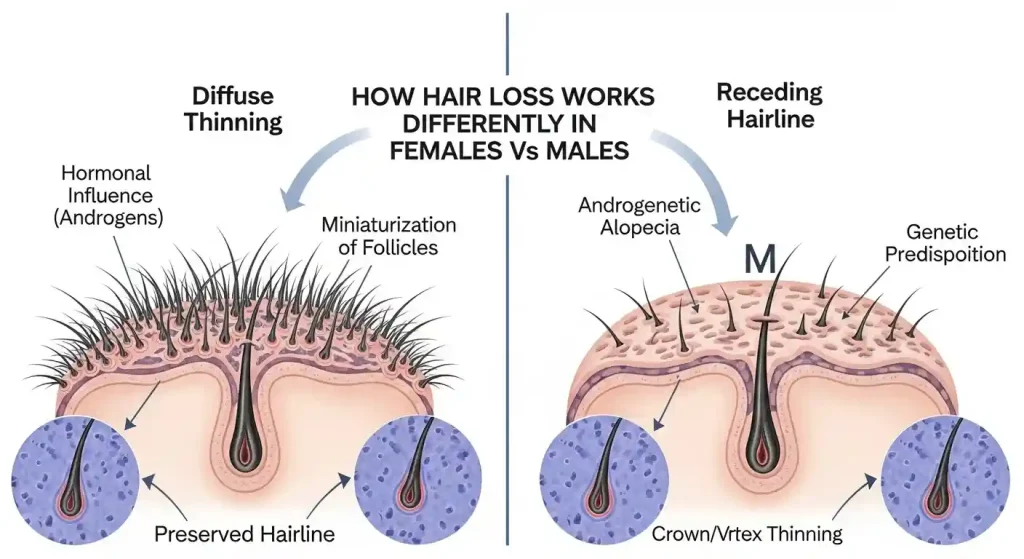
- Female hair loss causes and medical treatment often deals with diffuse thinning, hormonal fluctuations (post‐partum, menopause, PCOS), nutritional deficits, thyroid issues.
- Women may notice widening part lines, hair thinning on top, or more shedding when brushing.
- According to studies, treatments like platelet‐rich plasma (PRP), topical minoxidil, hormone modulators (under doctor supervision) show promise. (Wiley Online Library)
- In hair loss causes in males, the major players are genetics + DHT, often plus age, sometimes hormone imbalances. Male pattern baldness is more likely to show up earlier and more dramatically (receding hairline, bald crown).
Which Vitamin Deficiency Causes Hair Loss?
It isn’t just one. But some are much more commonly implicated:
- Vitamin D deficiency – plays a role in hair follicle growth & immune function; many people with conditions like alopecia areata have significantly lower vitamin D levels.
- Iron / Ferritin deficiency – especially in women, low iron impairs oxygen transport, which weakens hair follicles.
- Biotin, vitamin B12, folate also matter. While biotin deficiency is rare, even mild deficits or poor absorption can contribute to hair thinning. (Wimpole Clinic)
Medical Treatments: What Works (and What’s in Pakistan)
Alright, so you know some reasons—now, how do you stop hair fall immediately (or as soon as possible) and also treat long term?
- Topical treatments
- Minoxidil: a go‐to. For many, it slows hair loss, promotes regrowth. Using 5% or appropriate strength can show visible differences over 3‐6 months.
- PRP (Platelet‐Rich Plasma) Therapy
- Studies show that in patients with androgenetic alopecia, PRP can produce greater improvement than some topical treatments. For example, one Pakistani study comparing PRP vs 5% minoxidil found ~74.5% responded to PRP vs ~43.7% to minoxidil. (JCPSP)
- Hormonal / Medical Treatment
- For women: anti‐androgens, spironolactone, cyproterone acetate. One study: ~44% of women got regrowth with these treatments, another 44% stabilized, ~12% had worse density.
- Thyroid treatment when thyroid is the cause.
- Diet, supplements & correcting deficiencies
- If you’re low in vitamin D, iron, etc., correcting that is essential. Some case reports even show hair loss reversing when vitamin D deficiency is addressed. (ISHRS)
- Lifestyle & supportive care
- Reduce stress (meditation, therapy, good sleep)
- Avoid harsh chemical treatments, heat, tight hairstyles
- Gentle hair care routines
- Severe / advanced options
- Hair transplant surgery
- Advanced laser therapies
- Combination therapy often yields better results
Common Myths / Misunderstandings
- “If I stop the topical medicine, hair will never grow back” — not always true, but stopping minoxidil often causes the shedding to resume.
- “Natural remedies alone will cure pattern baldness” — rare, unless the cause is primarily nutritional or temporary.
- “All vitamin supplements are harmless” — nope. Overdose of vitamin A, selenium, or taking too much iron when not needed can worsen hair loss or cause health issues.
How to Stop Hair Fall Immediately? (As Much As Possible)
Okay, so you’re losing hair now and want relief fast. Here’s what to try:
- Use a good quality topical minoxidil as prescribed.
- Get a blood test: check vitamin D, ferritin (iron stores), thyroid levels, B12.
- Improve diet: protein, leafy greens, fish, nuts; avoid crash diets.
- Lower stress: exercise, sleep, mindfulness.
- Avoid tight hairstyles, chemical overload.
These steps won’t make overnight magic happen, but many people begin to see reduced shedding within 4-8 weeks; visible improvement (density, thickness) often takes 3-6 months.
Why Hairfall Happens in Females
Because women’s bodies tend to change more via hormones: puberty, menstrual cycle, pregnancy, childbirth, menopause. Also, conditions like PCOS, thyroid disease are more common. Nutritional deficiencies also hit women harder (due to menstruation, pregnancy). Genetics also plays a role.
Statistics: Putting It Into Perspective
- By age 65, ~53% of men and ~37% of women experience some level of baldness or noticeable hair thinning. (National Council on Aging)
- In Pakistan, over three-quarters (76.2%) of people studied reported hair loss; major contributing factors were stress (35.1%), poor hair care (28.9%), diet (25.2%).
- PRP vs minoxidil study: ~74.5% responded to PRP; ~43.7% to minoxidil. Big difference. (JCPSP)
Best Hair Loss Treatment for Females & What to Choose
Putting together everything above, here’s a “road map” for women (and really anyone) trying to decide on the best hair loss treatment:
| Step | What to do | Why it matters |
| 1 | See a dermatologist / trichologist | To diagnose cause: hormone tests, blood work, scalp exam |
| 2 | Correct deficiencies (vitamin D, iron, etc.) | Fixing the root cause avoids chasing symptoms |
| 3 | Topical treatments (minoxidil) + lifestyle changes | These are lower risk, easier to start |
| 4 | Consider advanced options (PRP, medication, hormonal therapy) if the response is insufficient | When early treatments aren’t enough, escalate carefully |
| 5 | Long-term follow-up | Hair growth is slow; consistency matters |
Conclusion
Hair loss causes are many: vitamin deficiency, hormones, genetics, medical conditions, lifestyle. The good news? Medical treatment for hair loss has come a long way. From topical minoxidil, PRP, to hormone therapy and correcting nutritional deficits—there are options that show real results. If you suspect you’re losing more hair than you should, the sooner you find why, the better your chances of stopping hair fall, regaining density, and feeling confident again.
If you like, I can also write a version of this article specifically for Pakistan (costs, availability, local doctors, popular treatments there). Do you want that?
FAQs: Hair Loss & Medical Treatment
Q1. What is the best medical treatment for hair loss?
The best medical treatments include minoxidil (Rogaine), finasteride (Propecia) for men, low-level laser therapy, and in advanced cases, hair transplant surgery. A dermatologist can recommend the most suitable option based on the cause.
Q2. What is the best treatment for hair loss?
It depends on the root cause. For genetic hair loss, FDA-approved medications like minoxidil and finasteride are effective. For nutritional deficiencies, supplements such as vitamin D, iron, or B12 may help.
Q3. What can cause hair loss medically?
Hair loss can be triggered by hormonal imbalances (thyroid, PCOS, menopause), nutrient deficiencies (iron, vitamin D, B12, zinc), autoimmune conditions (alopecia areata), stress, or even certain medications like chemotherapy.
Q4. What blood test is done for hair loss?
Doctors may order blood tests such as CBC (Complete Blood Count), thyroid function test (TSH, T3, T4), ferritin (iron storage), vitamin D, B12, and hormone panels to find the underlying cause.
Q5. What hormone is used to check for hair loss?
The main hormones tested include thyroid hormones (TSH, T3, T4), androgens (DHT, testosterone), and female hormones like estrogen and progesterone. High DHT (dihydrotestosterone) is strongly linked to pattern baldness.
Q6. Can vitamin D deficiency cause hair loss?
Yes. Studies show that low vitamin D levels are linked to alopecia areata and thinning hair. Vitamin D helps create new hair follicles, so deficiency may lead to hair shedding. Source
Q7. Which vitamin tablet is good for hair?
Biotin, vitamin D, vitamin B12, and iron supplements are commonly recommended. Multivitamins designed for hair, skin, and nails often combine these nutrients.
Q8. Can low iron cause hair loss?
Absolutely. Iron deficiency (low ferritin) is one of the leading causes of hair shedding in women. Iron helps red blood cells carry oxygen to hair follicles, supporting growth.
Q9. What are three symptoms of not enough vitamin D?
The most common signs are:
- Hair loss or thinning
- Fatigue & low energy
- Bone or muscle weakness
Q10. Which tablet is good for vitamin D?
Doctors usually prescribe vitamin D3 (cholecalciferol) tablets, as they are more effective than D2. Dosage depends on blood test results.
Q11. What drinks contain vitamin D?
Fortified drinks such as cow’s milk, plant-based milks (soy, almond, oat), orange juice, and some yogurts contain added vitamin D.
Q12. What are the signs of low B12?
Low vitamin B12 can cause hair loss, fatigue, pale skin, weakness, tingling in hands and feet, and memory problems.